
Canada’s meeting place for freelance writers and creators
Established 2010
Canada’s meeting place for freelance writers and creators
Established 2010


by Jeremy Enns
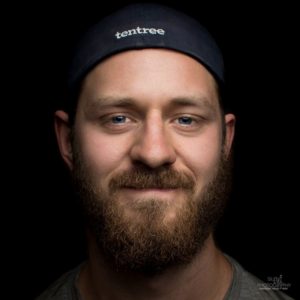 When I moved to Vancouver to start audio school back in 2011, I knew what I was getting into.
I was aware of the already long declining state of the music industry. I knew how few studios had staff audio engineer positions, and I knew how hard I would have to work to get one of them.
The thing is, I also knew that I didn’t care about any of that. I loved music and audio and would do what it took to establish myself.
Yeah, ok, so it turns out I really didn’t know what I was getting into.
After finishing school I interned at a couple of local studios, produced a couple of records but soon realized that I may have overestimated my love of audio and underestimated just how hard it was to make a living doing this work.
If I was honest with myself, I didn’t love it enough to show up at the studio at 8am every morning and leave at 3am that night, only to repeat the process the next morning six (or, let’s just be honest, more likely seven) days a week.
So I put the record producer dream behind me and spent the next five years working manual labour jobs landscaping, tree planting, landscaping again, while also taking a year to travel the world. It was in this period where I discovered the world of podcasting, and realized that maybe there was still some room in my life for that dream of working with audio.
A lot of my old audio friends ask me how I’ve been able to create this business, specifically how I was able to find clients to begin with. After writing dozens of emails detailing exactly how I managed it, I’ve noticed that few, if any, of the people I’ve replied to have followed through and managed to gain any kind of meaningful client base of their own, despite their talent.
It takes a lot of hard work, but I’ve boiled down the requirements to a few areas that I believe to be essential to getting established.
For example, my business now consists of a team of freelance writers and audio editors, digital products, consulting and more offerings that are currently in development.
To be fair, I got my start contracting for a production company like the one I now run, but this was really just a way to build up something of a portfolio, and the income was not really worth my time. I realized early on that to make a solid living, I was going to need to take matters into my own hands.
First of all, I want to state that I got my first clients through UpWork, the online freelance marketplace. I know there are strong opinions on both sides about UpWork, but I’m just going to say that it worked out for me only because I understand my ideal clients. Ok, now to the hard truth about getting established.
There are currently thousands of highly talented audio people on sites like UpWork, all vying for the same jobs that you are. Take a look at their profiles and you’ll see that they might be living in somewhere like Romania (or the Philippines, or India, etc) have 20 years professional broadcasting or studio recording experience, aaaaand their rate is $15/hr. Or $7/hr…
How can we hope to compete with that? Not only might we not be able to match their experience, but we probably also want to be charging $30/hr, or $50, or $80, or more!
The thing I realized early on (albeit after sending out dozens if not hundreds of proposals) was that the people who were looking to hire those types of freelancers were not people I wanted to work with anyway.
With this in mind, my next question of course was, “who DO I want to work with???”
For me, the answer came down to people who cared deeply about what they did, wanted to make an impact in the world, didn’t take themselves too seriously, and wanted to have fun with the work they did and the people they worked with.
So I tore apart my proposal template and started from scratch, trying to get across who I was, even - or rather especially - if that meant coming across as a little zany.
Here’s the opening line I used for a long time on UpWork:
“Hey hey hey! What’s up?!
Ok, so my name is Jeremy and I guess I’m a bit like a zombie, but instead of brains, I have an insatiable urge to devour audio and spit it out the other side all clean and spiffy!”
Totally not “professional” right?
But guess what, it did the job of filtering out people who I didn’t want to work with anyway and the people who gravitated towards my personality were often willing to pay over $30/hr (USD) which is what I was charging when I was starting out. Nowadays, the people who still find me through UpWork are often willing to pay the $70/hr that my rate is currently set at.
After this success, I re-worked the copy on my website to once again get the point across that I am not the average podcast consultant or producer, and that I want to exclusively work with people who think about the work they do differently than the rest of the pack.
As a result, my pool of potential clients is way down, but my competition is practically nil.
My experience with freelancing in a global marketplace can be boiled down to this:
You have absolutely ZERO hope of being able to compete based on your skill or on price.
None.
The only thing you really have to compete on is your personality. And while we often think this is the least important factor employers are looking for, it’s actually at the very top of the list, even if they don’t realize it at the time.
Your job is to put yourself out there so entirely that they can’t help but want to work with you. Do this, and you’ll quickly find that your competition ceases to exist.
Really there’s no other way to get established than to put yourself out there and make connections wherever possible. Here’s what my plan consisted of.
For me it took about six months, which doesn’t really seem like that long but the bulk of my clients came to me in month five. Those first four months I got maybe two or three clients, and I was super discouraged at how slowly the growth (if you could call it that) was taking place. But, I kept sending out proposals every single day and eventually caught a break (one week I got six new clients in 5 days. Yes, it was wild).
Depending on your experience with editing podcasts and working with audio I would suggest the first step is to do whatever you can to get some credits under your belt. Sure you might not be making the wage you want early on, but it’s a necessary and unavoidable step in winning over the trust of higher paying clients, even if you do have years in related audio fields.
The two routes I suggest are:
Keep in mind that the approach I recommend here is based purely on my experience and what worked for me. I’m sure there are other ways to break into the industry, but I am convinced that this approach will work given time and effort.
If there’s one thing that I believe to be key to doing this (or any) work successfully, it’s to know who you are and who you want to work with. Figure this out, and you’ll be able to charge more, eliminate your competition, and form amazing relationships with the people you work with.
Jeremy Enns is the Storyteller In Chief of Ascetic Productions, a podcast consulting, production, and education company. He is the author of the Cut The Bullshit Podcast Gear Guide, co-host of the Rain City Scoop Podcast, and a total nerd when it comes to audio, Star Wars, and ice cream (really the ice cream podcast should have given it away…) He would be soooo excited if you would come hang out with him and an amazing group of podcasters in the free Cut The Bullshit Podcast Community.
Next Post: Off The Wire: News for the Canadian media freelancer August 1-8
Previous Post: Off The Wire: News for the Canadian media freelancer July 25-31