
Canada’s meeting place for freelance writers and creators
Established 2010
Canada’s meeting place for freelance writers and creators
Established 2010


[caption id="attachment_15355" align="alignright" width="291"]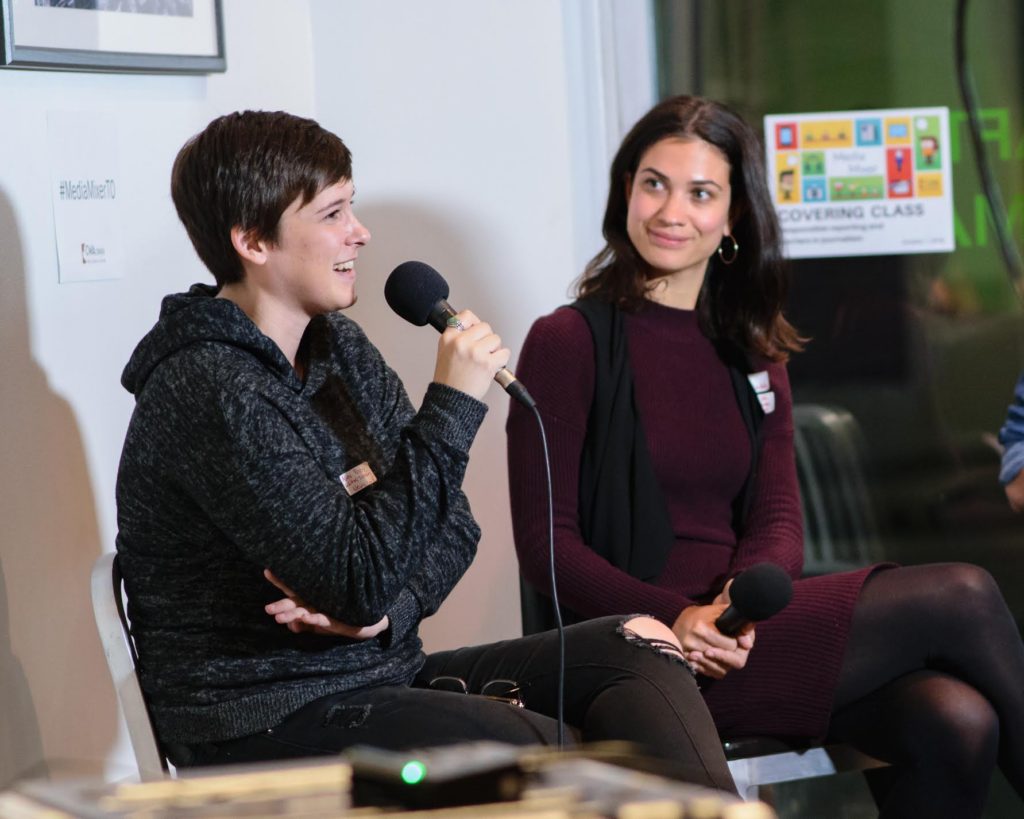 Alex Press and Sara Mojtehedzadeh at the Covering Class panel. Photo by Jared Ong.[/caption]
Alex Press had to do a lot of convincing to get the Washington Post to run her story about 260,000 UPS workers who were threatening to strike. The American workers were fighting a treacherous new contract that would have repercussions not only for unions but for working people in general.
“If they accept the work contract, that’s the signal to everyone that they can push down the standards even more,” said Press. “It was remarkable to see that there was no publication really aware of why this story was important.”
The Huffington Post was the only publication that “substantively” covered the story until her own piece ran in the Washington Post, she said. According to Press, this lack of interest by the mainstream media indicates the "anti-labour common sense" in the American media, though she said such attitudes are changing within outlets going through the process of unionization.
Press, an editor at the U.S.-based socialist publication Jacobin, was a panelist alongside Toronto Star Work and Wealth reporter Sara Mojtehedzadeh, at an event called “Covering Class: Responsible reporting and barriers in journalism.”
The October 1 event was organized by CWA Canada and drew about 50 media workers, journalism students and freelancers to a downtown Toronto café.
In fact, a Pew Research Centre study found that from 2007-2012, coverage of poverty across 52 major
[caption id="attachment_15359" align="alignright" width="313"]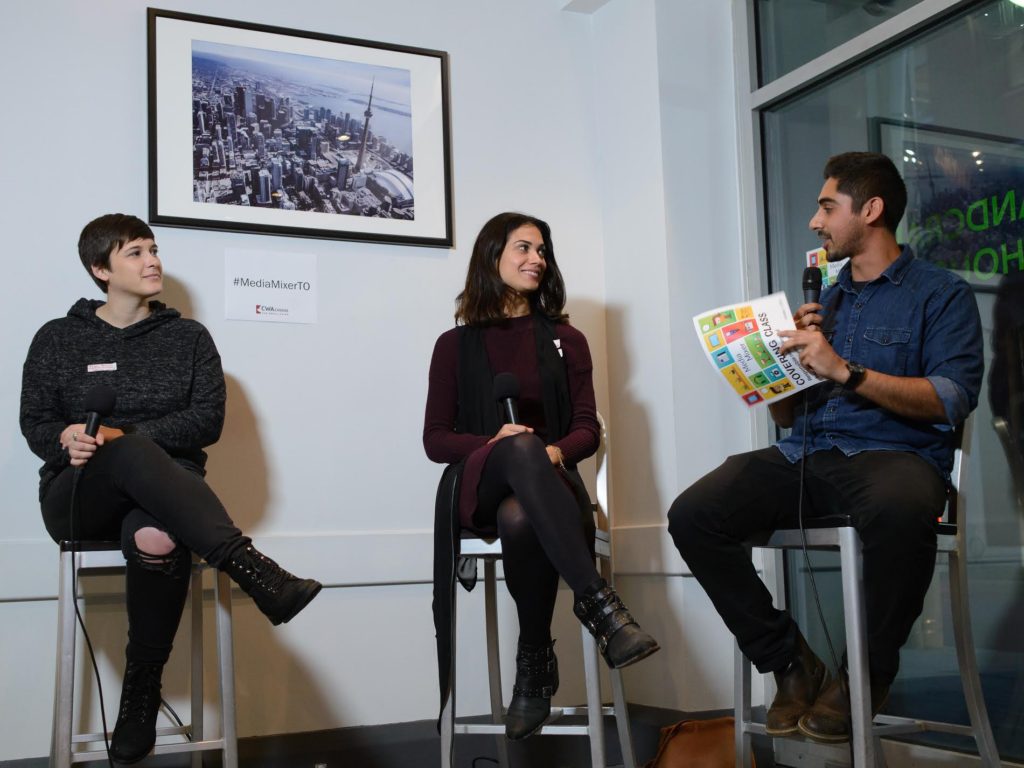 Alex Press, Sara Mojtehedzadeh and Nasr Ahmed. Photo by Jared Ong.[/caption]
American media outlets accounted for less than one per cent of news stories.
The facilitator at the discussion, CWA Canada’s Nasr Ahmed, noted that even when poverty is covered, journalists often rely on tropes – such as the “extraordinary poor person” who deserves to be helped or the “victim of the circumstance” – without covering the underlying systemic causes of poverty, or depicting the complexities of a person’s situation.
Mojtehedzadeh said it’s important for journalists to resist the temptation to impose their own narratives.
“A journalist’s job is to listen and capture the essence of what someone is telling you and by doing that very simple task, your story will reflect the agency of the people in it,” she said.
Mojtehedzadeh, who went undercover last year for an award-winning investigation into the exploitative employment practices of an industrial bakery, said that the Star was conscious about reflecting the resistance of the workers in that piece.
“It’s important to recognize in a story like that that people are not just victims of their environment,” she said. “They may be impacted by it but there are small and big ways in which they resist.”
“That’s particularly important in a precarious economy where people don’t have a workplace anymore,” Mojtehedzadeh said.
“People are out there as independent contractors, driving an Uber or whatever, and they aren’t necessarily able to connect the dots between their individual situation and the laws or loopholes that are structuring their environment.”
Echoing that point, Press said sometimes such analyses emerge from sources themselves when they are given the time to explain their circumstances.
Press said when sources provide such commentary it allows journalists working for mainstream media outlets to get around the constraints posed by the need to strive for objectivity.
In the process, said Ahmed, they can end up exploiting their sources and sometimes even misrepresenting them.
To combat those pitfalls, Mojtehedzadeh suggested establishing trust with people in movements and communities that workers are involved in.
“If you already have a relationship with the people they trust – and they trust you – it’s easier to form a relationship,” she said.
Journalists are often under pressure to deliver a story on a deadline, but Mojtehedzadeh tries to put the concerns and priorities of her sources first.
“If a worker doesn’t feel comfortable coming forward, or changes their mind, that comes first,” she said. “[Even if] that means I don’t run a story.”
Although Press had a similar point of view, working for an avowedly socialist publication seems to put her in a unique position.
“I understand it’s not practical for certain journalists, but [it helps] being of the community as much as possible so that it isn’t a distraction,” she said.
“It’s really an amplifier of certain issues. At least for me, I never write a story that I didn’t think more people should be aware of.”
“It’s part journalism but mostly rank and file workers themselves reflecting in a labour-friendly publication on what they are doing and learning,” she said, crediting the publication’s tendency for breaking news before anyone else due to it being immersed in the labour movement.
Mojtehedzadeh too acknowledged Labour Notes and said that news emerging from south of the border was often relevant for Canadian labour reporters.
“Keeping tabs on what they are reporting on, such as if employers are misclassifying activities – chances are that if that started happening two years ago in the U.S. its going to be an issue here,” she said.
Zaid Noorsumar is a Toronto-based freelance journalist who tends to cover labour, politics and social justice. He has a knack for reading about 20th century historical events while eating copious amounts of Nutella. You can follow him on Twitter at @NutellaFanatik.
[caption id="attachment_15362" align="aligncenter" width="446"]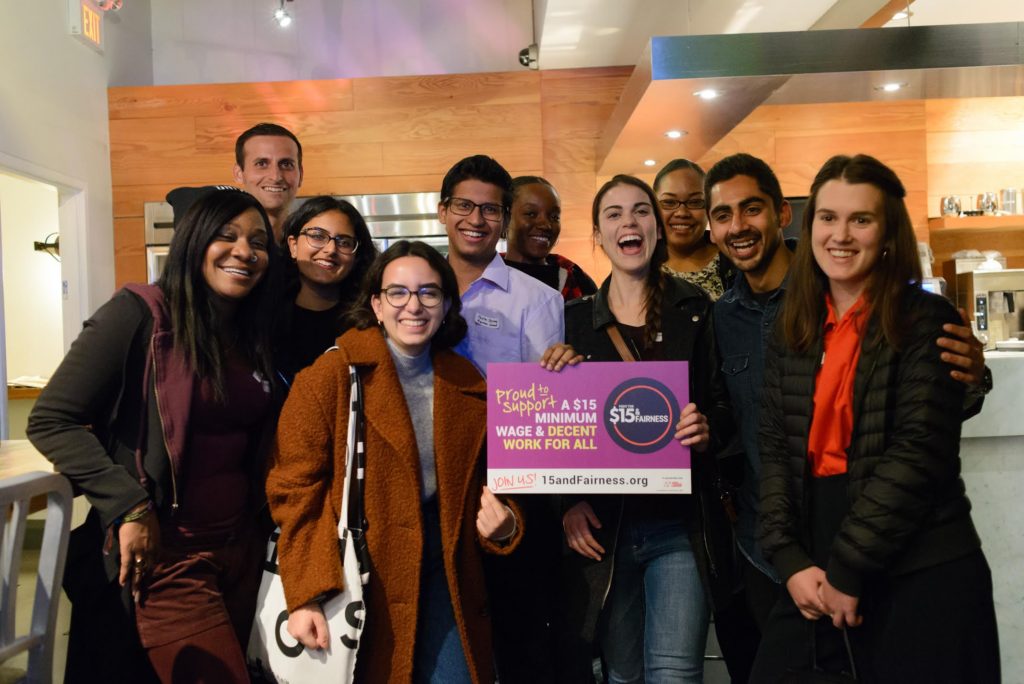 Photo by Jared Ong.[/caption]
Next Post: Freelance contracts a hot topic at Level Up conference in Toronto
Previous Post: Off the Wire: News for the Canadian media freelancer Oct 10-15