
Canada’s meeting place for freelance writers and creators
Established 2010
Canada’s meeting place for freelance writers and creators
Established 2010


by Bailey Martens
[caption id="attachment_14336" align="alignright" width="334"]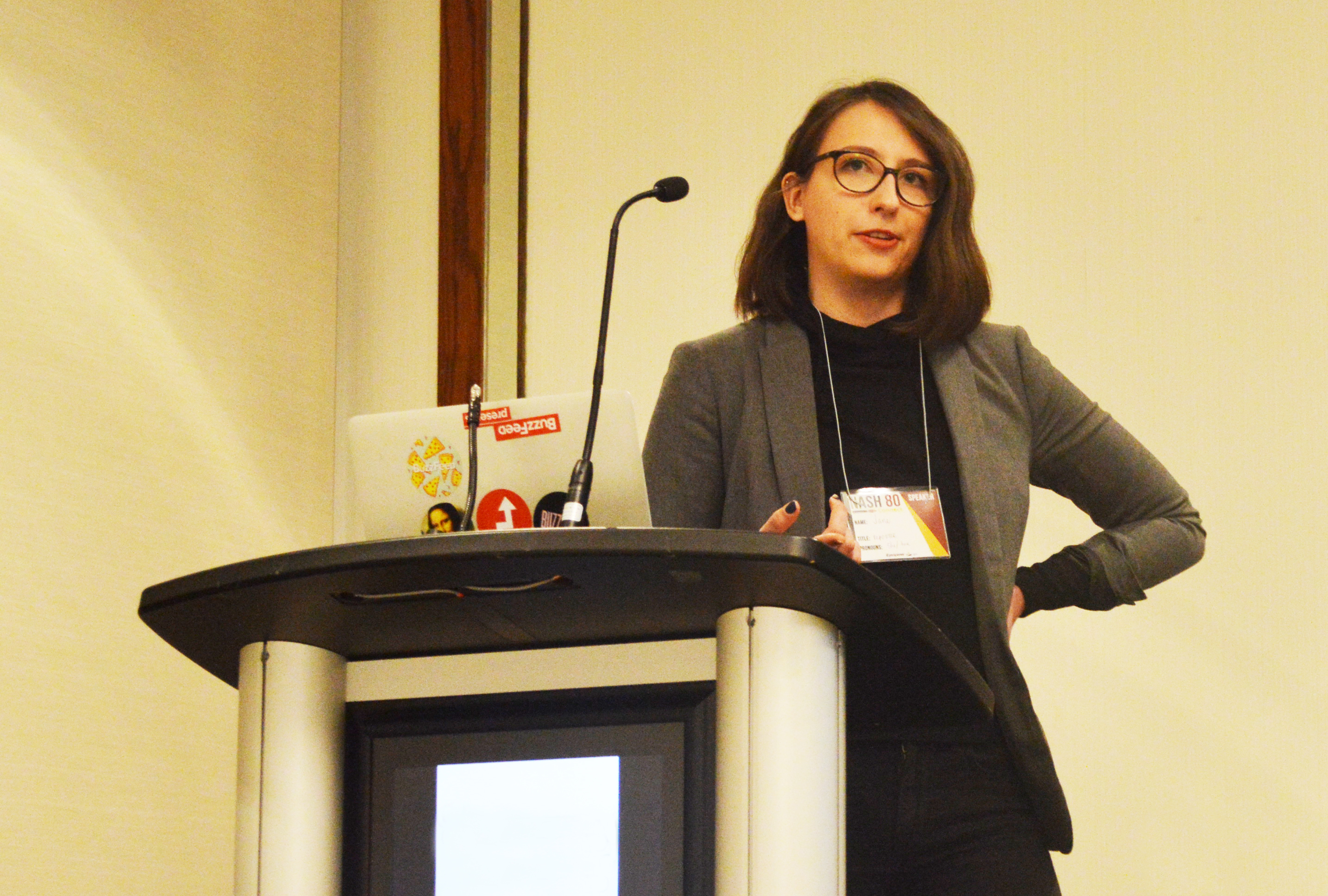 BuzzFeed Canada's Jane Lytvynenko speaks at NASH. Photo by Bailey Martens[/caption]
Calling the morgue to confirm whether an employee was cremated while having a nap is not fun, says Jane Lytvynenko. But for contemporary journalists, this kind of fact-checking task is an important part of the job.
Lytvynenko, an investigative reporter for BuzzFeed Canada, ran a session at the 80th annual NASH journalism conference in Toronto, Canada. Her session focused on fake news and equipped journalism students to be able to identify it and stop it from spreading.
Lytvynenko started her session with cute puppy gifs, as only a BuzzFeed reporter would, but moved quickly on to explain the difference between fake news and misinformation. Understanding the difference allows journalists to be able to properly talk about the problem, she said.
Fake news is news that is entirely false, said Lytvynenko, as opposed to misinformation, which is a twisted version of the truth.
Common examples of fake news stories include doctored images, videos or photos described as being from the wrong event, and health scams.
Lytvynenko said there are five important questions to ask about fake news.
Lytvynenko highly recommends Buzzsumo for this purpose. The website allows people to search for a specific headline and will then scour the internet to see where this article has appeared. If there are lots of hits and questionable usernames, she said, likely this is not a credible news source.
Pro tip: Fake news stories are often published across multiple websites that form a false news network. A large number of results on Buzzsumo could indicate a fake news story.
Using reverse image search, you can find other versions of an image that were posted at an earlier date. Lytvynenko suggests using Rev Eye to scour multiple search engines and countries.
Pro Tip: Right click Twitter images opposed to opening them in a new tab for Rev Eye to work correctly
DomainBigData, she said, is a search engine that locates information about who registered a domain. This can provide contact information.
Crowd Tangle allows users to see where a story was shared across social media. The Google Chrome extension, said Lytvynenko, locates Facebook pages and open groups, and popular tweets where the story has been shared.
Fake news stories, she said, generate money through ad revenue.
Finally, while spotting fake news headlines may be second nature to Millennials, Lytvynenko said it’s important to consider other generations. After all, she said, young people might realize a story is fake, “but will [their] grandma”?
Bailey Martens is an aspiring journalist and social media lover. She is the online editor for Mars’ Hill, Trinity Western Universities official student newspaper, and blogger on MissBaileyMae.com. Find her on Twitter @Miss_BaileyMae.
Next Post: Winter Media Mixer February 13 in Toronto
Previous Post: Off the Wire: News for the Canadian media freelancer Jan 16-22