
Canada’s meeting place for freelance writers and creators
Established 2010
Canada’s meeting place for freelance writers and creators
Established 2010


In this regular feature, Story Board asks Canadian writers to share a few details about their work habits and their strategies for navigating the ups and downs of freelance life.
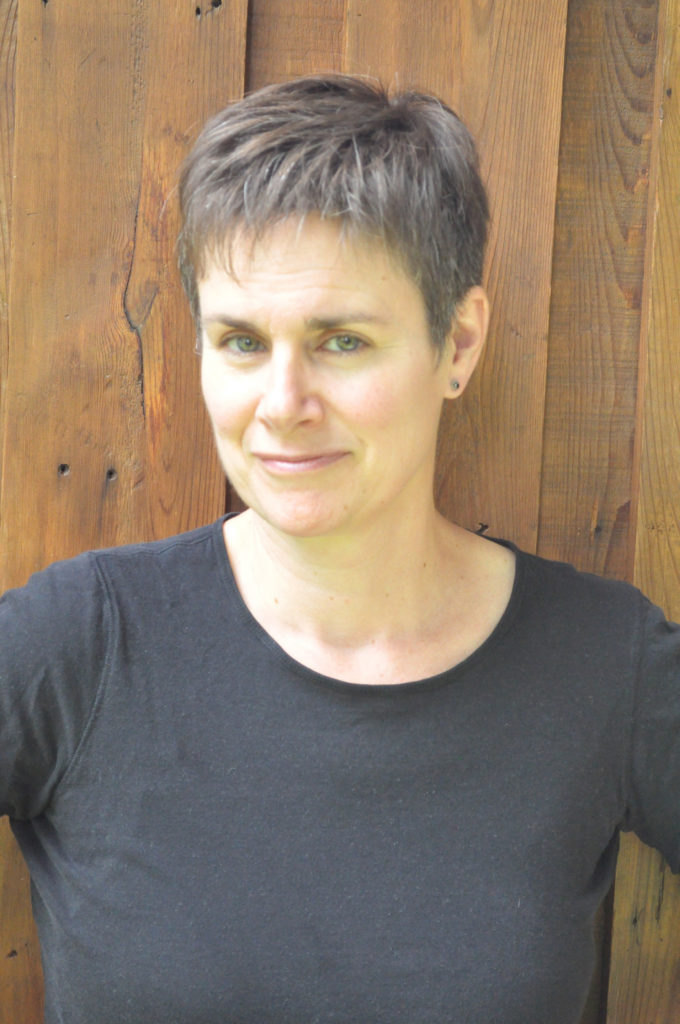
Alison Motluk is a Toronto freelance writer and broadcaster.
She has written for CBC programs such as IDEAS and Quirks and Quarks as well as for publications such as the Globe and Mail, New Scientist, and The Walrus.
Motluk led a workshop on negotiating strategies last month in a CMG Freelance training session in Toronto. She took the time to speak with Story Board recently to share some of her thoughts about negotiating, professional development, and the many joys and challenges of working as a freelance journalist.
What do you like about freelancing?
I like almost everything about it. I like planning my day. I like picking what stories I get to write.
I like working hard when I want to work hard and not working when I don't feel I can work.
I like working with a lot of different kinds of people but not being in the same room with them all day long.
There's a lot to recommend freelancing.
What are the biggest challenges?
The number one challenge, I'm sure everyone will agree, is that the pay is abysmal. And it hasn't always been that way. I started freelancing in '99 and, honestly, the rates have gone down over that time. So as my electricity bill and my gas bill and my food bill and the TTC go up, my wage has gone down.
I guess it happens in other disciplines, too, but I really find it unbelievable, still, even as I watch it happen. So number one, the actual rates are going down.
And number two, I think because the people who buy our work have less money, the quantity of opportunities, to some extent, has gone down.
There's so many things that have changed the nature of the business we're in. But is it that people don't want to read anymore? No, people still love to read and listen to broadcasts. Given these challenges, have you had any desire to return to full time work?
I don't have the desire to leave the lifestyle or find a full time job except for one thing. I don't want to earn at this level anymore. So that's my one thing. There's nothing unappealing about freelancing to me, to be completely honest, except for the pay.
So if I can find a way to make it work then I will continue.
What are your negotiating strategies for contracts?
Well the first thing I'll tell you is that sometimes you can negotiate and win the points you're negotiating on and it doesn't always end up being that good for you.
I do negotiate my contracts. Almost always I will change my contracts because almost always there's something in there that's objectionable. And almost always the clients will agree to that.
And usually those are really small things like "to the best of my knowledge I'm not libelling anyone," because I don't know what the libel laws are wherever you're broadcasting. There are some really simple things they're happy to cross out. Or sometimes I'll negotiate a different fee.
Sometimes, though, I've negotiated things and because of those negotiations I've ended up worse off. Years ago I had been working quite a lot for a U.K. publication and I was being paid in U.S. dollars and around the year 2000 the exchange rate was extremely favourable to me. But then the Canadian dollar started to climb, or the U.S. dollar started to drop. And that had a huge impact on me.
So I negotiated a Canadian dollar rate. It was really hard, I did it, I was so proud of myself. But that probably was not in my interest in the end because people were told not to work with me because I was too expensive. Well that's a really terrible thing to have happen.
Have you had other problems with contract negotiations?
Another problem can be the time it takes. I negotiated an egregious clause out of a contract once. I won that, I got it out of the contract. But by the time we agreed and by the time I submitted my first draft, things had changed at the publication and my direct editor was gone and my story was killed.
And I hadn't paid any attention to the kill fee. So I started paying a lot of attention to kill fees, because I'd never had a kill fee before.
So I know that as I go into negotiating, it doesn't always mean that what I'm aiming for will end up in the best result. There's always a bit of risk anyway. Taking a contract as it is or negotiating, there's always risk.
What's your number one piece of advice for negotiating a contract?
The most simple piece of advice is to treat it as an opening offer. When you are presented with a contract, that is their opening offer.
Read it, decide if it sounds good, and if you don't like something, suggest a change. It's not like this is set in stone. It's a contract.
I think a lot of freelancers don't even read their contracts. I think really, really, really, you ought to read your contracts.
What's the most important thing you've done over the years for your professional development?
I think reading the kinds of things you someday want to write has been the most important thing I've done for professional development. And reading them both as a reader but also with an eye to learning "how did they do that?"
When I started freelancing I had always dreamed of writing long form. And I always believed I could write long form but I wasn't actually doing anything longer than about 2500 to 3000 words.
And so I think reading with a very critical eye has helped me figure out: why did that work? How did they do that? How did they play with time in that piece? How did they make their point?
I think that's the number one piece: reading the people you admire. And there are a lot of good writers out there.
Do you think it's better to be a specialist or generalist as a freelancer?
I don't know what I would recommend, but I guess my feeling is right now that so many people are out there competing with me, the only edge I have is that there's one little thing I know a little more about than most other people. And that's what I'm trying to sell.
Most of my work now focuses on assisted reproduction and all of the implications of that: scientific, ethical, legal, policy.
That's a very specific niche.
It's funny: it is specific and yet it's very broad. Because the ramifications are huge. I could probably, if I really put my mind to it, focus only on the science. That's where I come from, I was a science journalist for the early part of my career. And there's enough science in that field and a lot that's of interest.
But I also really am interested in the societal implications, the policy implications, the legal. I'm even interested in the investment implications and so on.
So I know it is niche and I'm kind of experimenting with really focussing on it. But it might not work. It's been successful in that I've been recognized as knowing a little bit more than other people. The pieces I write have been acknowledged as being good.
But money-wise -- we can't ignore that this is work, you know. I don't think it's been successful yet. I think it might need a little more tinkering. It's an experiment-in-progress.
You can read some examples of Alison Motluk's writing on assisted reproduction on the Canadian Medical Association Journal website, in The Walrus magazine, and in Maisonneuve. You can find more information about her work on her website or follow her on Twitter at @AlisonMotluk.
*This interview was edited for length.