
Canada’s meeting place for freelance writers and creators
Established 2010
Canada’s meeting place for freelance writers and creators
Established 2010


In this regular feature, Story Board asks Canadian writers to share a few details about their work habits and their strategies for navigating the ups and downs of freelance life.
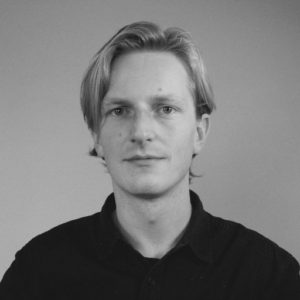
Geoff Dembicki got into journalism at a strange time. He graduated from Carleton University's journalism program in 2008, when the financial crisis and other troubles were causing the folding and downsizing of newspapers around the world.
"Basically, I graduated from school feeling very lost and confused," he told Story Board during a recent interview.
Nine years later, Dembicki has just released his first book. And it's already won him an award. Are We Screwed?: How a New Generation is Fighting to Survive Climate Change is the winner of the 2017 Dave Greber Freelance Writers Award for books.
He took the time to speak with Story Board recently about taking risks, finding community, and the importance of mentors in the lives of young journalists.
What happened after you graduated from journalism school? Some friends and I moved to Vancouver and I didn’t really have any prospects. I applied at the Vancouver Sun and Vancouver Province and they both promptly rejected me, which, in retrospect, was a blessing. Because I ended up applying for an internship at The Tyee in Vancouver.
At the time I just knew it was this interesting website that sometimes published stuff that I read and that seemed to be run by smart people. So I took an internship there and it ended up being the best thing that could have possibly happened to me as far as being a writer.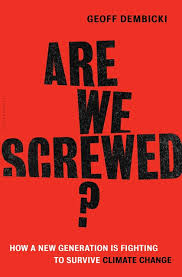
I think what a lot of journalists are really looking for these days, especially with the rise of freelance work and the collapse of a lot of traditional newsrooms, are strong mentors. And I had two of those right away when I worked at The Tyee. One was David Beers, a magazine writer from the Bay Area. He’d edited for Mother Jones magazine, he won a National Magazine Award in the U.S. for a feature he did in Harpers. And the other editor I worked closely with was named Monte Paulsen. He’s an incredible journalist, he’d covered wars in Africa and been in Washington DC for a number of years.
So right away, right out of school, I was working with these two amazingly talented journalists. And so very quickly I learned a lot.
And the other thing was, because The Tyee was this relatively young, nimble online operation with not a huge staff or budget, they basically had no problems throwing me into big stories or situations that would have taken me years to work up to at a traditional paper.
So for example, two years out of journalism school I was covering the Olympics in Vancouver as the lead Olympics guy. That just wouldn’t have happened at the Vancouver Sun. And then after the Olympics ended I was sort of casting around for something new to do and Dave Beers suggested I start writing about Canada’s oil sands. So that kind of set the stage for where I am now, in a way.
What's the best thing you’ve done for professional development over the past few years?
The single best thing was just moving to Vancouver with no prospects and ending up at The Tyee. Far and away. Having access to mentors and having a place where I could test out ambitious ideas and just be kind of thrown into situations.
So maybe, to generalize that, the best thing that happened was just my willingness to just take risks and see how things would end up.
I know for a lot of graduates it’s really scary and you don’t know how things will work out. But there are a lot of points over the last years where I just sort of said “fuck it” and went somewhere without much of a plan. And usually there were a lot of challenges and difficulties and then something would kind of work out and I’d move to the next stage.
What’s your freelancing routine like?
It’s fun and exciting, because I’ve gotten to write for a lot of cool places recently. Like The New York Times and The Guardian and The Atlantic and Vice.
But it’s also kind of lonely sometimes. I’m in my studio by myself sending pitches off into the void waiting for strangers to get back to me. I’m sure most journalists can relate to that.
Sometimes I miss having that larger community of people who all work together and exchange ideas. But it’s kind of interesting when you’re newer in the industry and just meeting other writers and editors and you’re all complaining about the lack of pay and opportunity and then you see your peers get new opportunities and jobs.
So a lot of my bigger freelance assignments were just because I knew someone and they suddenly became an editor somewhere and they needed a writer right away.
You meet people and then you reconnect down the line. A friend of mine just became an executive editor at Penthouse. And she got in touch and asked if I wanted to do a feature for one of their print issues next year, so I thought why not? They actually pay pretty well. So I’m writing about Hurricane Harvey for Penthouse.
You said you miss having the community that comes with working in a newsroom. How have you tried to solve that?
Well one way is trying to meet as many writers as possible and stay in touch with them. Ask about their projects and ideas. That’s one way to do it. But it’s kind of a one-off thing. The other thing that I’ve done is just get into a studio where I’m working with other people who aren’t necessarily writers but people who are doing creative work. So right now I’m in a studio down near Commercial and Hastings.
I’m sharing a room with several filmmakers. There’s often people in there and we bounce ideas off of each other and we kind of work in similar areas sometimes, so we can share sources or talk about getting our work out to a larger audience. So, in a way, that’s sort of replaced the community that I once had at The Tyee. But not 100 percent.
I don’t know if you’ve tried working at home for extended periods of time, but it can drive you crazy.
What’s your advice for people who are looking at a career in journalism and wanting to freelance?
If it’s a recent journalism graduate in Canada reading this I would say right away stop thinking about Canada. Almost immediately. If you’re only writing about Canada for Canadian publications you basically cannot make it as a freelancer. At least I can’t see a way that you would.
But if you look across this sort of imaginary border with the U.S., which has sort of been erased by the Internet, there are so many new digital publications down there. And most of the big legacy ones mostly do their stuff online and they publish tons of stuff every day and they’re looking for writers.
And if you start looking at stories in Canada that could have a larger U.S. or global impact, it’s really easy to pitch that stuff into the U.S. If you look at climate change, for example, so much of what’s happening around oil or climate or Indigenous peoples or whatever else that’s of great interest in the larger story is happening right here in Vancouver and Alberta.
I would say also that I wouldn’t write off everything in Canada. Especially for a younger grad, Vice is a really good place to pitch stuff. They in some ways have a similarly open approach to writing and ideas [as The Tyee does].
Vice also, whatever criticisms people may have of it, it’s at that sweet spot where it’s really accessible for younger writers but older, established writers and editors and publishers really look to it and are fascinated by it.
Any other advice?
I guess the other thing is just to try to meet as many people your age or other ages that are interested in writing and journalism. Find people who share your interests and hang out with them and ask them how they’ve tried to make careers, and go for beers with them.
And then my final thing is get to New York at some point. In 2014, my partner and I, we have friends in New York, and we decided to just go down there for a month just to hang out and see what would happen. And I just looked up every journalist there who I knew and respected and just asked if they would go for coffee with me or get a beer. And most people ignored me but I ended up meeting a lot of really cool people.
This book and a lot of the big freelance assignments I’ve done since have come out of those meetings, conversations and opportunities. So, Geoff Dembicki’s three tips: pitch into the U.S., meet a lot of journalists and go to New York.
So it’s important to just put yourself out there and face potential rejection?
Being a freelancer, the alternate job title is “Professional Accepter of Rejection” so it just comes with the territory for sure.
You can see some of Geoff Dembicki's work in The New York Times, The Guardian, and The Tyee. You can also find him on Twitter at @GeoffDembicki. His book Are We Screwed?: How a New Generation is Fighting to Survive Climate Change launches tonight at the Anza Club in Vancouver at 6 p.m.
*This interview has been edited for clarity and length