
Canada’s meeting place for freelance writers and creators
Established 2010
Canada’s meeting place for freelance writers and creators
Established 2010


By Derek Finkle
October 2010 was a watershed month for e-books. That’s when Amazon announced that Kindle e-books had outsold hardcover and paperback books amongst the top 25, 100, and 1,000 bestsellers on its web site over the preceding 30 days. “This is remarkable when you consider that we’ve been selling hardcover and paperback books for 15 years,” said a company spokesperson, “and Kindle books for just 36 months.”
Since then, with the introduction of the tablet and the development of short read e-book platforms such as Kindle Singles, the opportunities afforded by e-books has only continued to grow. There are many examples of writers capitalizing on e-books to maximize the value of their work, in some cases eschewing print media altogether. At the same time, print publishers are experimenting with paywalls and e-books to better monetize their digital content. Just last week, Simon & Schuster announced it was launching a self-publishing arm called Archway Editions, which will, for fees ranging from US$1,599 to US$24,999, help authors produce e-book versions of their work.
With the prospect of royalties entering the picture, there is money to be made – in some cases a lot of money. The days of publishers paying little or nothing for electronic rights may be numbered. E-books are giving writers an increasingly enticing direct-to-market option. We are in a precedent-setting time. Rights are once again up for grabs.
As The Globe and Mail’s media columnist, Simon Houpt wrote just a few months ago, “For the first time in decades, some of the power is shifting back to the writers.”
This moment resonates to some extent with the Writers Guild of America’s 100-day strike in late 2007 and early 2008, when two of the main issues of contention were DVD residuals (which were unchanged from the nascent home video market of the mid-1980s) and the burgeoning delivery of television shows and movies as digital downloads via the Internet. WGA members realized these issues had to be resolved despite criticism from some studio chiefs that the cost of producing DVDs was rising and that it was premature to be striking over the sale of work via the Internet because there were supposedly no profits in it at the time. In the end, the writers won important increases in residual payments, as well as separated rights provisions when it came to new media.
The emergence of e-books in the marketplace (around the time of the strike, coincidentally) also raises many important questions for writers. Should freelance writers in particular (whom I will refer to as independent journalists) simply hand over e-book rights to publishers in the same way that for years now they’ve been handing over electronic rights to their work for little or no financial benefit? Does the new e-book format – which, for the most part, didn’t exist during the years when writers were asked to give up their digital rights – mean that the slate has been wiped clean and that print publishers who now decide to produce e-books containing writers’ archived work should pay them royalties?
The Canadian Writers Group has had a front-row seat on early negotiations – some might say tugs-of-war – between writers and publishers over single-length e-book rights. In this series, I’d like to focus on the negotiations our agency has had around these issues on our writers’ behalf with the Toronto Star, Toronto Life and the Walrus. I will also share some insights about our experience publishing e-books on behalf of our writers. I am doing so to help spark a conversation around these issues and in the hope that my experience will help writers considering publishing e-books independently – or those who have been approached by publications wishing to publish e-books of their work – make informed decisions.
Digital Rights: The 1990s
First: some background. In the mid-to-late 1990s, when newspapers and magazines began to give away their online content for free (attempting to generate Internet ad revenue that never really materialized as hoped), independent journalists had little choice but to follow suit. Often, publishers told writers who requested extra payment for the additional use of their work that they weren’t making any money by digitizing their work, so could not pay for it. At the time, many publishers argued that writers should be happy for the exposure that having their work posted online offered. The following passage from the current contributor agreement for the Canadian Reader’s Digest is a typical example of the position that most publishers took (and still take) regarding paying creators for digital rights:
“At the moment, RDM is not making money from these [electronic] rights. Requesting these rights is an exercise in brand-building that may make money at some point in the future. The use of work online is, at this point, simply good for authors in terms of exposure. Today, RDM, like all publishers, is not monetizing effectively these rights. We are still working to develop a successful electronic/digital business model. When audiences for online content develop into a revenue-generating proposition, if RDM generates profit, then authors are entitled to receive appropriate compensation for that usage. Until then, RDM asks that writers trust it and allow it to use content to create a context which will benefit both RDM and authors alike in future.”
In other words, the Darwinian publishing landscape in which we are all living remains in a dramatic state of flux. Recent developments, though, underscore that we’ve entered a “reset” moment with respect to the value of digital content. First, newspapers have increasingly decided to stop giving away their digital content for free. (Following in the footsteps of The New York Times, The Globe and Mail has already instituted a paywall and the Toronto Star has announced one will be launched in 2013.) Second, the e-book has emerged as a popular and potentially lucrative new format allowing writers and publishers to sell their content online.
Byliner and The Atavist: American Single E-Book Market
Byliner and The Atavist in the U.S. are the two most successful online boutique publishers of the 5,000-30,000-word single e-book format developed by Kindle. Byliner shot out of the gate in the spring of 2011 with Jon Krakauer’s investigative tour de force, Three Cups of Deceit, which was reportedly downloaded 70,000 times in the first 72 hours after its release. It rose to number one in the 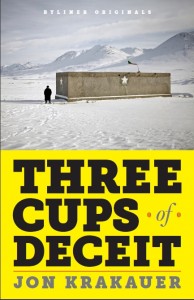 Kindle Singles store and months later Knopf Doubleday published the story as a traditional trade paperback.
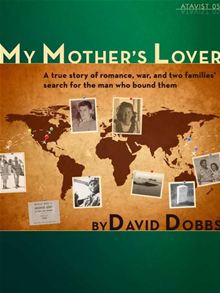
The Atavist had a bona fide hit of its own the same year with a story by independent journalist David Dobbs. My Mother’s Lover is about his mother’s love affair with a flight surgeon during World War II. Dobbs, who has written for The New York Times Magazine, Wired, and National Geographic, had pitched the story to a number of magazines, but failed to garner any interest. His e-book sold for $2.99 – the same price as Three Cups of Deceit – and became the sixth most downloaded e-book on Kindle. (That number refers to the e-book’s standing among all of Kindle’s e-books; My Mother’s Lover became a number-one Kindle Single). In September of 2011, Dobbs said his e-book had “a healthy five-figure number” of copies sold, generating more revenue than his previous two books combined.
 When it comes to how revenues are divided, Atavist co-founder Evan Ratliff told The New York Observer: “We give basically an even split with our authors. It’s not always that but give or take it’s usually around 50 percent.” (Founders of Byliner have said they approach revenue splits the same way.)
Of course, not all e-books are destined to become huge hits, but the takeaway from Krakauer’s and Dobbs’ experience is clear: Not only can e-book writers reach a far wider audience than ever before, if they have a popular story to tell, the chance to earn royalties means their earning possibilities are limitless. While the American e-book market is arguably farther along and more robust than the Canadian market, especially when it comes to single-length e-books, Canadian writers are wise to pay attention to the industry standards that have emerged south of the border.
Finding Karla: First Bestselling Kindle Single by a Canadian
In the spring of 2012, working on her own, independent journalist Paula Todd tracked down Karla Homolka, whom Todd discovered is now a mother of three 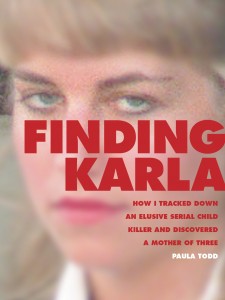 living in Guadeloupe, and married to her lawyer’s brother. When she landed the story, Todd knew she’d nabbed an enormous scoop. However, instead of writing her account for a magazine or newspaper, she decided to publish it in e-book form in partnership with the Canadian Writers Group.
Our agency, inspired by Byliner and The Atavist, had begun to consider publishing a series of single-length e-books in the fall of 2011. At the time, no Canadian equivalent to either model existed (nor does a parallel model exist today), so we decided to become a publisher – albeit one focused on the single-length e-book. (Later in the series, I will discuss some of the other e-books we’ve published and how they came to exist in both print and e-book form.)
Finding Karla was, as far as I know, the first e-book published by a Canadian to break a big news story (and it was recently named one of the top news stories of the year by Yahoo Canada News). Released on June 21, it rose up the bestseller list to number one on Kindle Singles in a matter of days. Similar to David Dobbs’ My Mother’s Lover, a healthy five-figure number of copies sold within Finding Karla’s first month, and there were a few publishers who paid sizeable fees to excerpt the e-book and photos taken during Todd’s trips to Guadeloupe. Back in the summer, I told a number of reporters that Finding Karla had generated about ten times the revenue that Paula Todd would have been paid for a feature by a top-paying Canadian magazine – all within a week of being published. In keeping with the industry standards Byliner and The Atavist had established, CWG split royalties with Todd on a 50/50 basis.
After Finding Karla became a bestseller, both The Globe and Mail and Toronto Star took notice. Simon Houpt, the Globe’s media columnist, declared the e-book “Journalism’s 14,000-word future” (online, the title of Houpt’s article is “Does a $3 e-book on Karla Homolka represent a new wave of journalism?”). The Star, citing sales figures between 65,000 and 70,000 as of mid-August, called Finding Karla a “publishing breakthrough”.
 Paula Todd wasn’t the first journalist in Canada to publish a single-length e-book. In February of 2012, Maclean’s published The Shafia Honour Killing Trial by staff writer Michael Friscolanti, based on his coverage of the Ontario Shafia “honour killing” trial. The National Post has also published several e-books over the past two years, including last spring’s Diamond Jubilee: Our Tribute to Queen Elizabeth II, which had no specific bylines.
The difference between the Maclean’s and National Post e-books and Finding Karla is significant: The former were presumably written by salaried staff reporters and published by the media organizations that employed them; Finding Karla was written by an independent journalist and published by the writer’s agency that represents her.
Toronto Star
Before recounting specific negotiations with the Star in which our agency has been involved on behalf of its writers, some background is in order with respect to the Star’s Freelance Agreement, which most independent journalists are asked to sign when they take on work with the paper.
In the summer of 2011, the Star controversially updated the Agreement. Although it doesn’t specifically refer to e-books, the Agreement gives the newspaper sweeping rights to commissioned work “in any medium, context or form whatsoever, and by any means or technology, whether now known or developed in the future.” One of the more troubling aspects of the agreement is that this could include movie rights, television rights, or rights to produce a book (or e-book). The Star agreement also clarifies that such rights are “perpetual” and “royalty-free.”
A number of organizations representing independent writers, including the Canadian Media Guild, the Professional Writers Association of Canada and even some Star freelancers, have been in discussions with senior Star management about the agreement for more than a year now around the issue. To date, the Star has made a few changes to the agreement (most importantly, deleting a clause that put responsibility for libel solely on the shoulders of the independent journalist) for its weekly paper, The Grid, and is currently reviewing alternate language that the Canadian Media Guild has proposed for some of the contract’s controversial clauses.
The Canadian Writers Group has been encouraging its writers, when possible, to assess the digital possibilities in a work, especially longer, feature-length pieces, before selling it to a magazine or newspaper that requires both print and digital rights. As time goes on, we predict more writers will embark on e-books and sell print-only rights to print publications (unless print publications are able to meet the revenue potential of an e-book or share fairly in the royalties).
On November 8, the Star launched Star Dispatches, its pay-per-read single-length e-book program. The launch raises some questions – especially since the newspaper plans to institute a paywall in 2013. What type of content will be featured on Star Dispatches? Will the Star break news with its e-books? Will the e-books expand on news stories that run behind the paywall? Assuming readers are generally accepting of the paywall, will they want to pay more for Star Dispatches? Stay tuned.
This fall, the Canadian Writers Group was engaged in negotiations with a senior editor at the Star on one of our writer’s behalf over a three-part series that the newspaper wanted to publish. There was a twist, however. The Star wanted to turn the series (reporting on a major social issue) into an e-book for its Dispatches program, and eventually publish it with Kindle and other e-book retailers.
The first question we asked the editor was what royalties the Star intended to pay for a Dispatches e-book. The editor confessed that Star reporters had raised the same question and had been told they wouldn’t be receiving royalties for Star Dispatch e-books they produced. The fee the Star offered our writer for the series was in line with a fee I’d seen offered to another writer for a series of that length. The fee did not seem to include any additional compensation for producing the extra few thousand words or so that the e-book required; nor would the Star’s usual contract grant the writer e-book royalties or perpetual rights.
The writer had real concerns about the precedent he would be setting by agreeing to write an e-book without royalties. He also had questions about what would happen if he later decided to turn his series into a full-length book. Would he be able to remove the shorter e-book from the market so that it didn’t cannibalize the longer book? The Star Dispatches editor agreed that these were significant contractual issues that needed to be sorted out; ultimately, we decided to move forward with the series but not with the e-book.
Read Part Two: the Canadian Writers Group’s negotiations over digital rights with Toronto Life.
Read Part Three: a new e-book initiative at the Walrus involving Coach House Press.